

Effortless
Or was it?

(This essay is a draft from Writing in Nebraska, a work-in-progress.)
If you asked me how it felt to create a piece I wrote recently, or what my process was, I would say something like: I had an emotion—strong and deep and painful—about a news story. Then I remembered an incident that got to the root of all that emotion, and wondered if I could connect what was happening in the news with that memory. The essay could explain a lot for people who couldn’t quite tune in to the emotional part of the story.
When I finally sat down at keyboard, the whole story all came out in the space of two hours.
It was effortless.
But it wasn’t.
Those two hours were to get a first draft. But prior to that, I had some space and time between me and the page—probably a few days of being too busy, during which the ideas bubbled like a pot of beans on the back burner.
When I sat down to write, I thought I would finish and publish it on Substack right away, to stay current with the news. That would be a break from my usual process, but surely I could do this and maybe hit the news cycle?
But after those two hours, I had to pick up groceries. While waiting for them to be loaded into my car, the thought occurred to me that something was missing. My inner English teacher asked, “Why is someone else going to read this?”
Oh right, duh, appeal to the reader. I’ve taught that concept so many times, and here I was all caught up in my own point of view.
But I knew there are plenty of people who would feel the same emotions in wordless, numbed shock. I could be their voice, I could put words to the big feelings we were all having, so I needed to revise with them in mind. I had to make a second pass, which would take a few days to carve out time.
“Effortless” is one of those words that begs to be challenged. When witnessing a performance or hearing something that transports us out of body, we might think the actor, athlete, musician, writer “makes it seem effortless.”
One of the prime examples that comes to mind are Serena Williams blasting a 138-mph return winner during a mixed doubles game. Her talent, technique and physical training gave the world some of the best tennis in decades, perhaps ever. She will always be my favorite tennis player, bar none. And probably my favorite (human) athelete. (For 21 minutes of Serena, watch this maybe later.)
During the first year of COVID, before the vaccine, I surfed into a video of Yo-Yo Ma, in his Songs of Comfort Series. That one video anchored my soul. I knew I could get through the horrible uncertainty of it all because of the gifts and talents of humans who would get us through—the immunologists to musicians to comedians. YoYo Ma’s effortless performance was of course a culmination of his experience, his training and his gifts. His face registers not the effort in playing but his emotional reaction to the sounds he creates with the aid of his Muse, Bach, and all those music teachers and mentors. The simple video heals wounds every time I listen.
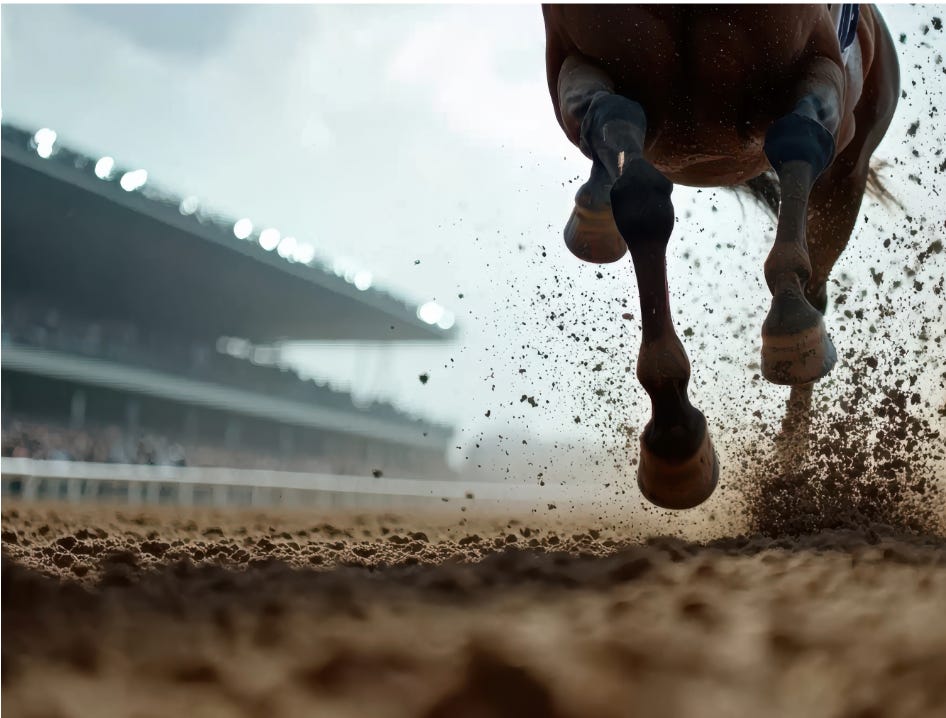
Secretariat’s win at Belmont in 1973, clinching the Triple Crown in astonishing record time, was said to be effortless. Get your hanky.
A 25-length easy win at 37-ish mph. Effortless—if careful breeding, the skilled eyes of horse trainers, the soft heart and wealth of his owner, and a world-class jockey meant nothing. Secretariat himself had a love for speed, the just-right bone structure, and a heart bigger than most (literally and figuratively). He thrilled us all that day. Big Red was larking about, having fun being the fastest horse on the block. Ron Turcotte said he never used the whip once.
It wasn’t effortless but it was breathtaking, transcendent and purely magical, especially for the 14 year old horse-crazy me who got to see it and the previous two races live and in color. Up until that day, my favorite horse was Man O’War, but Secretariat outshined his ancestor that day and is forever in my heart.
Effortless then is something of a contronym, a word with more than one meaning, which are opposites. How so?
Effortless describes peak performance that is the culmination of so much effort and intensive thinking to the point that the athlete, writer or musician is in a flow state. They are unconsciously using all of the skills they have drilled down to muscle and bone, ear and eye; and they send us into a flow state where the skill and effort fade away, leaving nothing but peak moments, bliss and full attention.
Note, I am NOT putting myself on the same level as Serena Williams, Yo-Yo Ma or Secretariat, but there are similarities in the basic process toward high competence with a skill. Practice, muscle memory, skill building, some talent, more practice.
After “Deep in the (Broken) Heart of Texas,” I learned a bit more about myself. I’ve been practicing and writing for a while now—there are habits and moves that I don’t consciously see anymore. I just slip into the zone. Below, I tried to provide a checklist of these parts of my writing process. It’s not always in this order and I shift on the fly without knowing. Though I can never claim such excellence as hers, it is much like Serena finessing a return with muscle memory: forehand or backhand, spin, direction, speed. BOOM.
In the writing classroom, my job is to get you started writing, offer some tips and tricks, and make sure you start to own your own writing process. But it takes practice and effort to get to the “effortless” place. See if your own writing process is something like this.
Effortless Writing Checklist
Start with an idea, story or a scenario
Do reporting and research for background, quotes and information
Choose the appropriate mix of ethos, pathos, logos.
Make it relatable but not too generic
Explain something differently
Find an analogy or metaphor
Flesh out some characters or details
Predict reader’s thoughts at this point
Surprise the reader
Surprise yourself
See if your current ending is a better beginning, or paragraphs could be re-ordered
Check original idea: off the mark a little or a lot, better than first thought, completely fulfilled the brief?
Polish it.
Let it sit.
Re-read, re-polish.
Let it sit.
Re-read (maybe out loud) through the eyes and ears of beta readers.
Now, I feel like this essay is done—a feeling as though I’ve eaten a full meal and can stop. In the same way I continue to pick at the ham on Thanksgiving, I’ll re-read, edit, polish. I might leave it a bit rough because I really don’t want to be too self-conscious of the process.
The antidote for that? Moving on to the next chapter. Writing. Practicing. More writing.
Usually, practical tools like this ‘Effortless Checklist’ live in the Tool Shed for my Paid Subscribers. But because this is a preview of my new book, Writing in Nebraska, I wanted everyone to have it.
If you want to build your own Tool Shed and support the writing of this book, consider upgrading to Paid below.